
On October 8, Premier Danielle Smith held a news conference in which she announced that the province was ordering the City of Edmonton to roll back parts of its recently implemented zoning bylaw reform to put a stop to the worst excesses of the infill development the bylaw has engendered. “The goal should not simply be more housing,” said the Premier, “but more housing that is planned and integrated in a way that works for both existing residents as well as future families.”
While drastic, this was but the latest salvo in a long-running battle over the redevelopment of Edmonton’s mature neighbourhoods. This debate has always had two components: a pragmatic one, concerned with density and its consequences, like parking, traffic, and sunlight, but also a more abstract one, related to issues of appearance and character. With her announcement, the Premier has taken square aim at the former. Whether or not you agree with the policy, this is something regulation is well suited to address — it’s relatively straightforward to write concise rules governing the overall size and shape of buildings. Much trickier is figuring out how to make them look less bad.
Council attempted this previously. In the 2010s, infill in Edmonton was beginning to take off, and was almost immediately accompanied by controversy that has continued, largely unabated, until today, centered primarily on the same two issues that we continue to argue about: density and design quality. Then, as now, Council took the position that, in the name of density, they weren’t going to do much to tighten the rules on scale or parking, but, in 2017, recognizing that a lot of what was getting built was pretty unattractive, they did attempt to do something about design quality. Their solution was to add several provisions to the Mature Neighbourhood Overlay (MNO) of the then extant Edmonton Zoning Bylaw that were intended to improve the appearance of approved developments.
Specifically, they added provisions to the MNO requiring:
staggered facades in semi-attached or attached dwellings,
“facade articulation” (recessing a portion of the front facade),
and “architectural interest” (to be implemented using “design techniques such as variations in roof lines, use of different exterior finishing materials, articulation of building façades, or varied architectural designs”),
and forbidding:
“identical or mirrored front elevations” on abutting sites.
These provisions largely carried over to the current zoning bylaw. While I appreciate their intent, they are bad policy. One can immediately think of multiple beautiful buildings that violate these rules and multiple ugly buildings that comply with them. Most would agree that they have had little appreciable effect on the aesthetic quality of infill in Edmonton, because they are fundamentally the wrong tool to address the problem at hand.
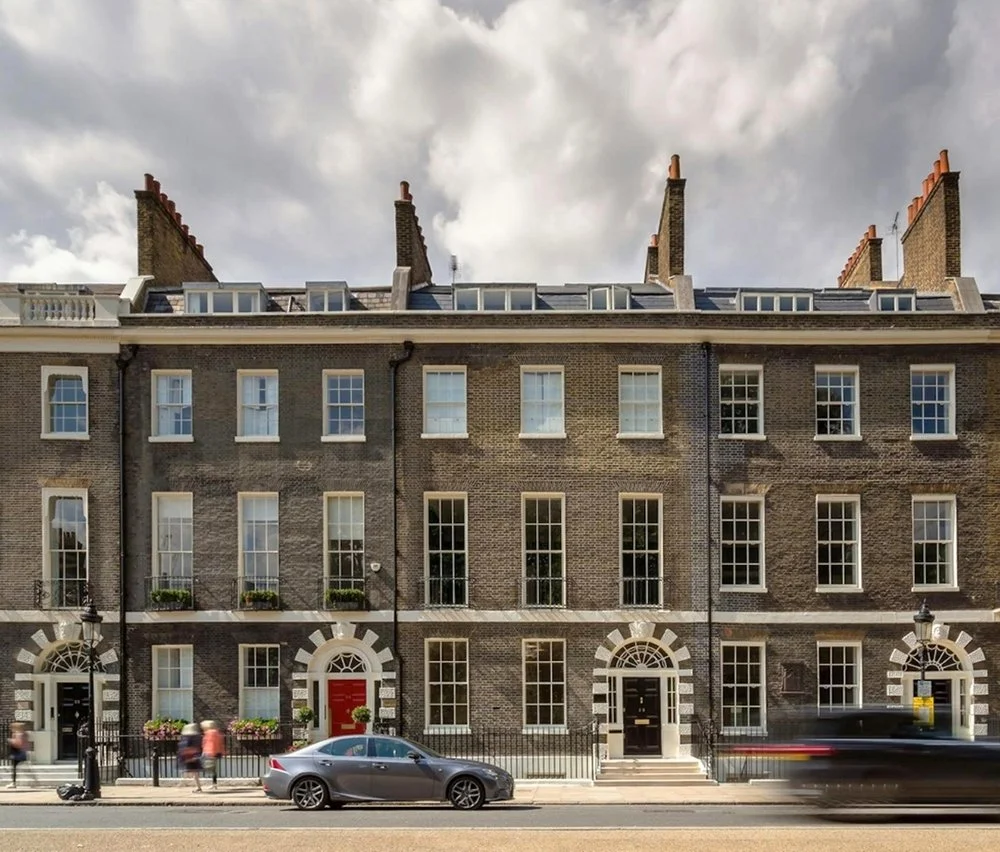
Bedford Square, London, conspicuously lacking in facade staggering, variations in roof lines, use of different exterior finishing materials, articulation of building façades, or varied architectural designs, and possessed of identical or mirrored front elevations. Image source.
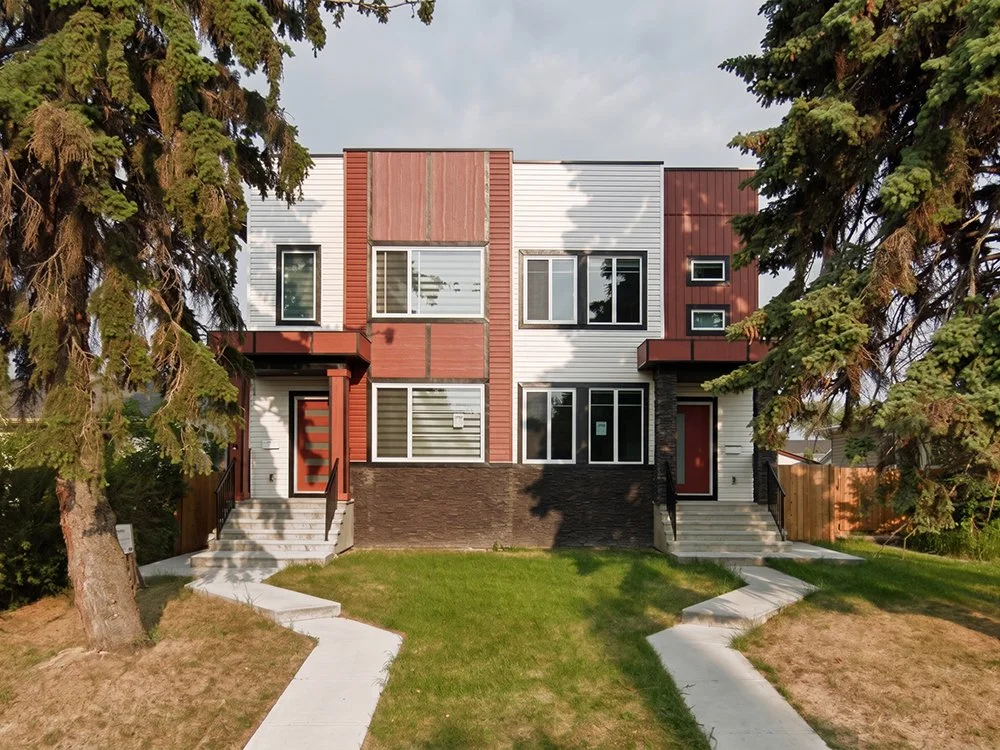
Compliant building, Edmonton.
My point with all of this: you can’t regulate your way into a beautiful city. If Edmonton has an issue with the aesthetic quality of its built environment, this isn’t because we haven’t yet come up with enough rules to govern the appearance of our buildings — it’s because the people who rent, buy, use, and occupy buildings don’t demand better, because they might not know what better looks like or that it’s possible. And because they don’t demand it, industry has never had to learn how to deliver it. We don’t have a rules problem, we have a culture problem.
So how do we change the culture? While there’s no reliable answer to this question, over the last few years I’ve spent more and more of my time advocating for an architecture school, because it seems to me the most obvious place to start. If you want your city to have nicer buildings, hire people to study that, and train people to do that.
An architecture school is a means to create and sustain discourse on the topic of building and architecture. It would host faculty who would conduct research and who often direct small design- or community-oriented projects, and provide a venue for local practitioners to engage with students and research by teaching design studios. People can’t demand what they’ve never seen. A school puts examples in front of them: studio projects on real Edmonton lots, public reviews and exhibitions, and, eventually, built works authored by graduates.
Schools of architecture typically have student associations that invite speakers and promote events, and are of course composed of cohorts of students to attend these and other events in the city. A school would attract idealistic, young, and talented people to the city, and allow us to retain some of those from Edmonton and elsewhere in Alberta who every year depart to study architecture and don’t return. It’s slow, and it’s diffuse, but this is how you change culture.
The absence of a school in Edmonton is conspicuous. Although the U of A had one of the first architecture schools in the country, which trained the architects responsible for many notable structures we see in the city today, it closed in 1940 when its founding professor, Cecil Burgess, retired and, possibly because of the war, never reopened. We are today, by far, the largest metropolitan area in Canada without one. Toronto, Montreal, Vancouver, Ottawa, Calgary, Quebec City, Winnipeg, Kitchener–Waterloo, and Halifax all host one, and smaller centres including Hamilton, London, Victoria, and Windsor sit within 100 km of a program. Western Canada in general is materially underserved by architecture programs, with roughly one-third fewer schools of architecture than Ontario, Quebec, or Atlantic Canada on a per-capita basis.
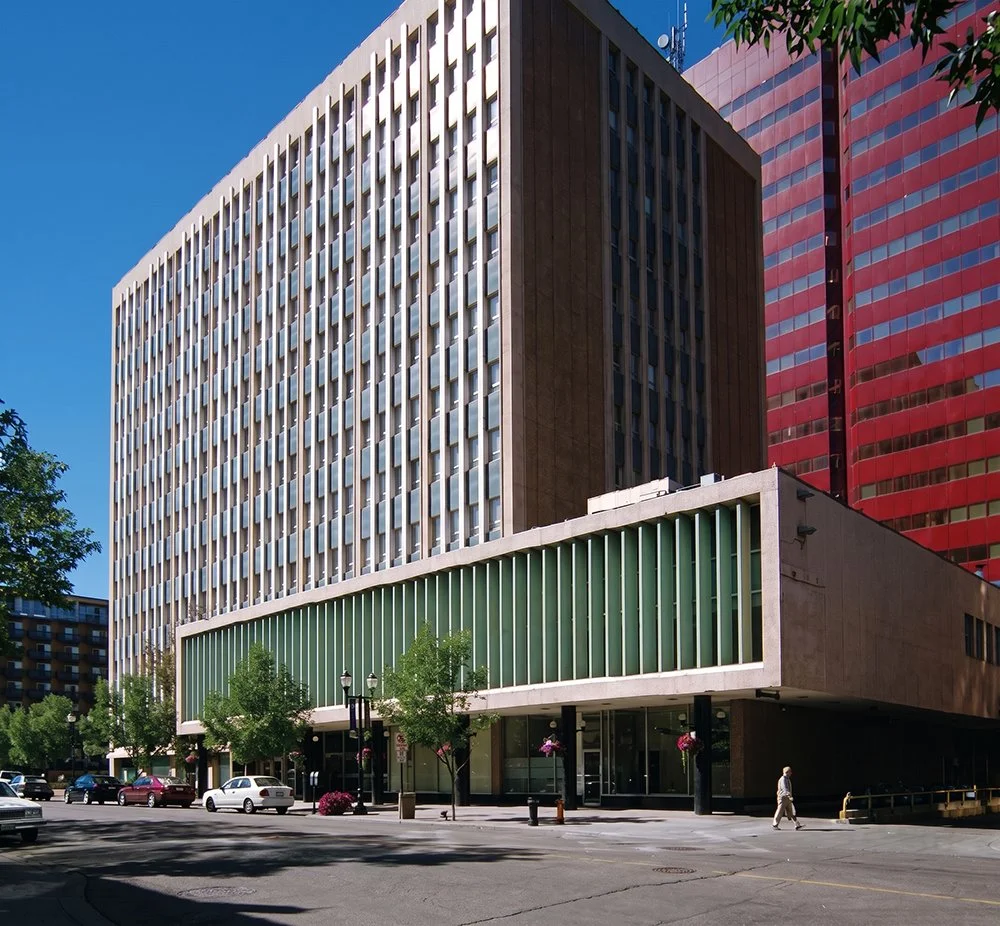
Milner Building (formerly the Northwest Utilities Building), designed by U of A architecture graduates Rule Wynn Rule. Image: Image: James Dow / Capital Modern.
As a result, Alberta has a shortage of architects relative to peer Canadian provinces, with roughly one-third the registered architects per capita of British Columbia or Quebec, and about half that of Ontario. The shortage is particularly acute in Edmonton. Of Alberta’s approximately 900 registered architects, about 500 practise in Calgary. Edmonton, with a comparable population, has roughly half that number. The gap between Calgary and Edmonton is even more pronounced when one considers Intern Architects (architects at the beginning of the registration process), where the ratio is closer to 3:1.
We therefore rely on architects trained elsewhere, where the climate, economy, and construction culture may be different. While we undoubtedly benefit from outside perspectives, architecture, in an increasingly immaterial world, remains a stubbornly local practice. Buildings are physical objects built by human beings on sites subject to local zoning bylaws, building codes, trade availability, weather, etc. You can’t take a detail from, say, Vancouver, stick it onto a building here, and expect it to work (I know, I’ve tried). We need a place to train architects in the particularities of this place. I’m sure this will lead to better buildings, but I hope it will also lead to something else: a cultural maturation in which we less frequently look elsewhere for inspiration and focus more on exploring the constraints and opportunities of this place.
There is an economic argument for a school: buildings are the largest stock of fixed capital in the province, which architects play a critical role in stewarding; the provincial government projects a shortage of architects in the workforce over the coming decades; cities rated as more attractive are better able to attract and retain talented workers, etc. All true, and probably what will persuade a government, but this isn’t what excites me most about the project. For me, it’s fundamentally about building identity in an increasingly homogeneous world — about fostering understanding and appreciation of this place and using this to make buildings that look better, work better, and feel like they belong here. This is considerably tougher work than changing a few zoning rules, but I think it has a much higher chance of success.
As I alluded to above, I’m working on a few things to this end. To demonstrate student interest and viability, I am, with Ian Mulder, teaching an introductory general-interest course on architecture at the U of A in the winter 2027 term (SUST 300, generously hosted by the Sustainability Council). The course is open to all U of A students; if you fit this description, please consider registering.
I’ve been working on the project of a school informally for a couple of years, which until recently has consisted mainly of coffees, beers, and lunches. Along the way I’ve met so many people who are enthusiastic about the idea and want to get involved, but aren’t sure how or where they can contribute. To provide a locus where all of this energy can be aggregated, Ian and I are also in the process of forming an advocacy group, provisionally named CASE, the Committee for an Architecture School in Edmonton. We’re still figuring out exactly what this organization is going to do, but we’re hoping to start with some kind of event; if you’re in any way interested in participating, please reach out here.